Mission
To educate IT professionals who combine technical competence, service orientation, and ethical responsibility in organisations and communities.
 PUST · Computing and Information Technology
 Focuses on networks, systems administration, cybersecurity basics, and enterprise IT support.
Four-year Information Technology pathway covering programming, networking, databases, systems administration, cybersecurity fundamentals, and a final-year project.
Program Overview
Focuses on networks, systems administration, cybersecurity basics, and enterprise IT support.
Focuses on networks, systems administration, cybersecurity basics, and enterprise IT support. Students develop practical skills in enterprise IT, network infrastructure, software support, and digital systems management through laboratories and project work.
To educate IT professionals who combine technical competence, service orientation, and ethical responsibility in organisations and communities.
To graduate information technology specialists recognized for practical skills, digital literacy, and contribution to technology-enabled development.
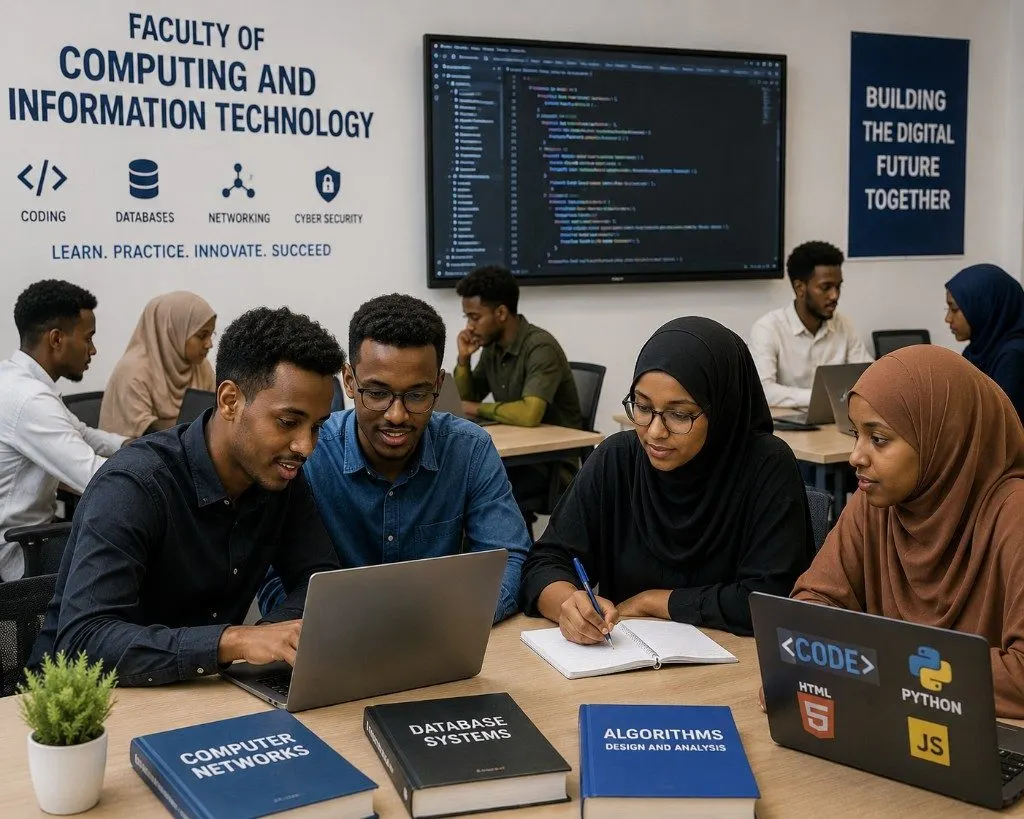
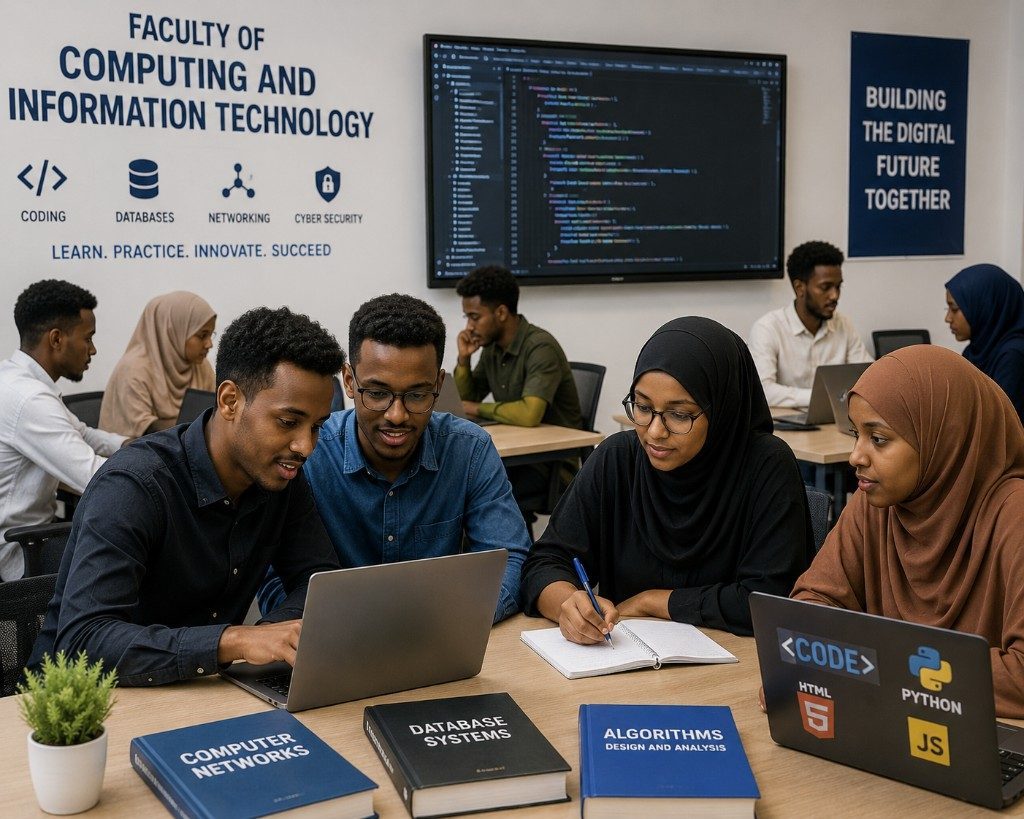
Students learn through lectures, computer laboratories, networking practice, team projects, and hands-on systems administration exercises.
Computer laboratories, networking facilities, and project workspaces support programming, infrastructure configuration, and IT support practice.
Foundations in LAN/WAN design, routing, switching, and enterprise connectivity.
Server configuration, user management, backups, and operational IT support.
Security awareness, access control, and protection of systems and data.
Data modeling, SQL, and business information systems.
Applied programming and web technologies for IT solutions.
Introduction to cloud services, virtualization, and contemporary IT platforms.
Diagnose, configure, and maintain hardware, software, and network systems.
Analyze organisational IT needs and propose appropriate technical solutions.
Apply foundational security practices to protect users, data, and infrastructure.
Support users and teams with clear documentation and service delivery.
Programming basics, computer systems, mathematics, and digital literacy.
Networking, databases, web technologies, and operating systems.
Systems administration, cybersecurity, cloud concepts, and project work.
Field practice, final-year project, and graduate preparation.
Admissions
Follow our unified admissions roadmap. Our enrollment staff are fully dedicated to processing your credentials.
Review our engineering, sciences, and business programs catalog to select your perfect path.
Compile school certificates, high school transcript cards, photos, and passport identity files.
Complete the online PUST enrollment sheet on this platform carefully.
Settle the $20 administrative processing fee at our aligned banking counters or secure portals.
Sit for the fundamental general scientific and mathematical entrance assessment exam on campus.
Receive the formal registrar enrollment certificate package with class schedules.
Secondary school certificate or equivalent with satisfactory performance in Mathematics; Physics or Computer Studies recommended.
Application form, academic certificates, identification document, and passport-size photos.
Submit the online application, provide documents, and follow Admissions Office guidance.
Deadlines are published by the Admissions Office for each intake.
Different degree programs require specific credentials. Select your intended level of study to inspect target registration benchmarks before applying.
Tuition & Fees
| Programme | Duration | Semester Fee | Annual Fee | Registration | Schedule |
|---|---|---|---|---|---|
| Information Technology | 4 Years (8 Semesters) | $270 | $540 | $15 | Semester-based payment before registration confirmation |
Applied Learning
Students learn through lectures, computer laboratories, networking practice, team projects, and hands-on systems administration exercises.
6 learning environments
Modern workstations for programming, troubleshooting, software installation, and end-user support scenarios that mirror daily IT operations.
Configure routers, switches, and cabling; build LAN/WAN topologies; and diagnose connectivity issues in guided lab sessions.
Practice server setup, user management, backups, monitoring, and routine maintenance tasks essential for IT infrastructure roles.
Learn access control, patching, hardening, and security awareness through structured exercises in a controlled lab environment.
Work in groups to design, document, and deliver IT solutions—developing communication, planning, and service-delivery skills.
Apply programme learning in workplace settings during internship and final-year project work with professional supervision.
From the first semester, you move between lectures and labs—building the technical habits, problem-solving mindset, and professional conduct expected in ICT roles.
Graduate Outcomes
Graduates from information technology enter professional roles across industry, public service, entrepreneurship, consulting, and further study.
4 graduate pathways
Graduates support organisations in public sector, private enterprise, NGOs, and technology service roles across Puntland and Somalia.
Questions
Quick answers about duration, admission, tuition, and training requirements.
4 common questions
The programme is four years (eight semesters), including coursework, laboratory practice, internship, and a final-year project.
Strong performance in Mathematics is recommended. Physics or Computer Studies is helpful.
Contact the Admissions Office or faculty for the latest approved course information.
Use the online application portal and submit all required academic and identity documents before the intake deadline.
Applications now open
Submit your application online today. Our admissions team will guide you through document submission, review, and enrollment for the next intake.